
I was drawn this evening after thinking about the design and architecture (stone masonry) of various Mayan temples, to consider comparable structures across the Pacific ocean. The first examples that came to mind were the Cambodian temples of Ankor Wat. Next I considered the many handcarved stone temple structures of India. I learned in college (Cuyamaca college) that there is very real scientific value in art history and the architecture of ancient settlements. Specific identifiable techniques can be traced through history and across continents in stone work and temple building. This allows historians to study the mason work and imagery set in stone by ancient civilizations and find the religious and cultural constants that prove a commonality and connection between ancient practices.
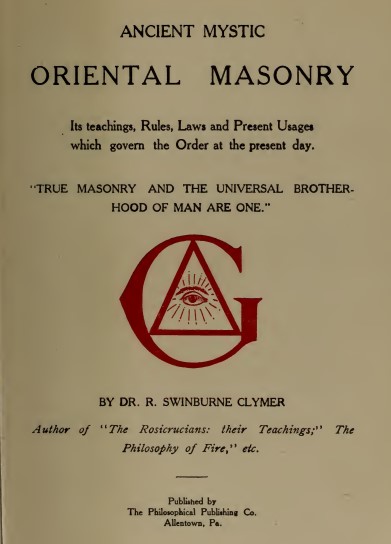
Some people want to make common knowledge seem to be some sort of rocket science. When you learn that much of what is presented in certain esoteric fraternities is absolutely simplistic and should be taken at face value, it become easier to untangle the mysteries and see in the dark clearly. What is masonry? Stone building. Who are masons? Men and women that study the arts and techniques of the temple builders of antiquity and throughout the ages. Simply put, masonry is the study and application of technique in regards to the building blocks of life, applied to any and every science known to man.
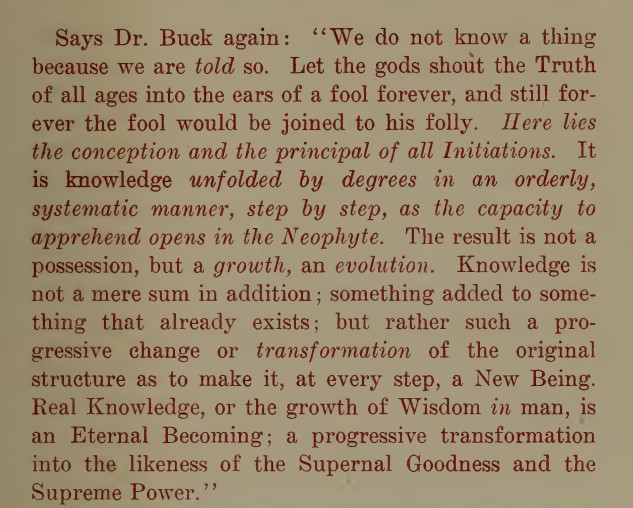
One thing that is a constant and is proven in the arts and sciences of masonry is that even in antiquity, there was societal interconnectivity. The presence of specific similarities in design, technique and application become instantly recognizable to the trained eye. This is to say that, without any questionable doubt, it can be proven that there was no serious isolation as it pertains to the growth and development of ancient civilizations, even if the only contact and connection between those civilizations was via the collective universal consciousness.

Now, I’ll write about the similarities in structure and design between various temples located in South America and Southeast Asia. First, let’s look at some of the major Mayan temple structures known to have existed in the past. After doing so, let’s look at the temple structures in Cambodia. In the example of Koh Ker (a structure in Cambodia), we can clearly see the same design used in many of South America’s platforms called step pyramids.
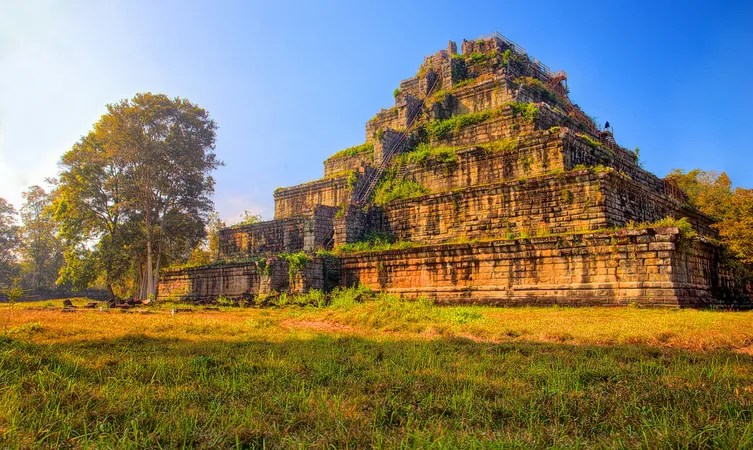
The temple of Kukulcan in Chichen Itza automatically comes to mind when I consider the structural design of the Cambodian pyramid. Online research reveals that Koh Ker was constructed between 921 and 944 AD. The temple of Kukulcan in Chichen Itza is sai to have been constructed by the Mayan civilization in 1,000 AD. I’ve written in depth in the past on the fact that there is absolutely and Indian (from India) and Meso-American connection without any doubt. In my book “The Kaliformula: Legion of the Badlands” I explaind how the Goddess of the Indian thugs “Kali” was also known and worshipped by Mayans, also the connection between the modern term “Chola” used to refer to Meso-American gangster girls and the Chola dynasty rulers of India.
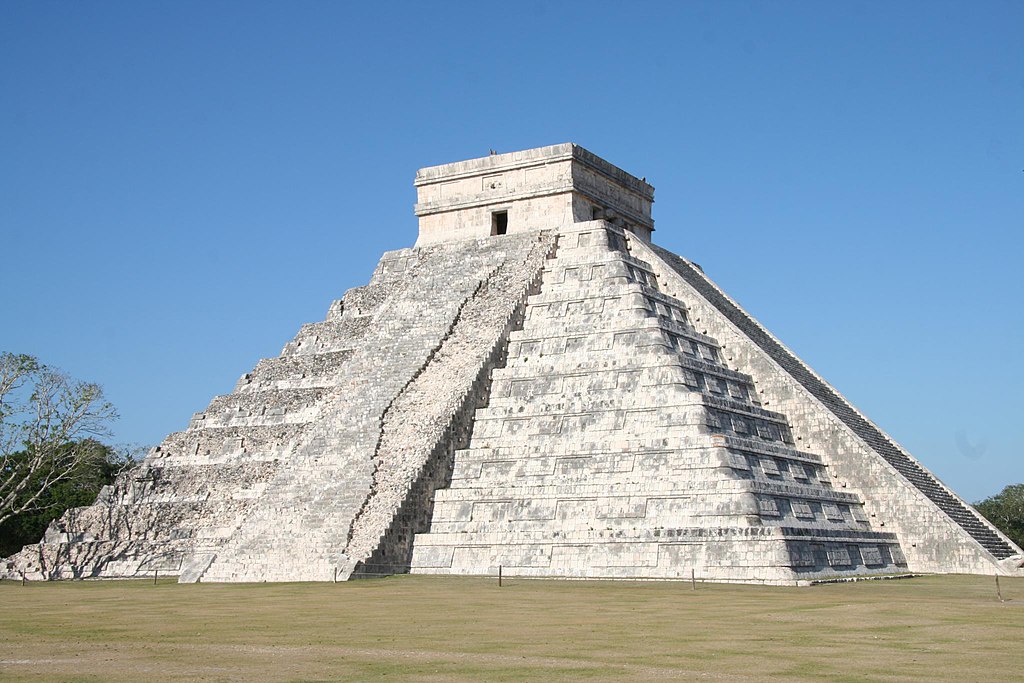
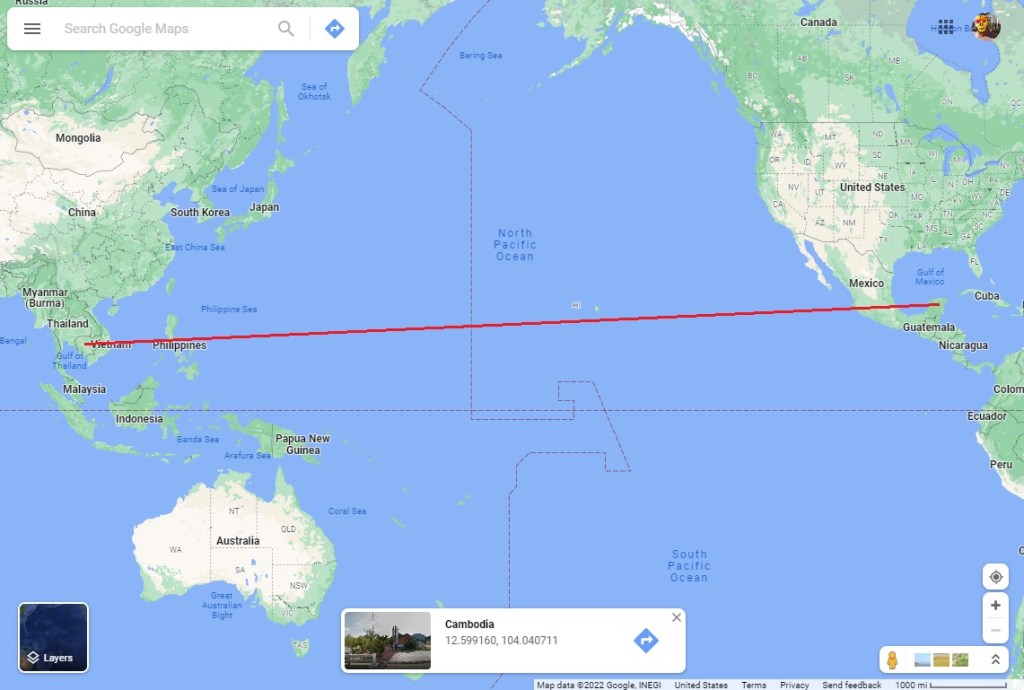
After looking at a map to chart the distance between the step pyramid at Koh Ker and the step pyramid in Chichen Itza, I was amazed to see just how far these two locations are from one another. The two structures are indeed different as well as the same. That’s to say that what ever these two step pyramids are supposed to be, they are at the very least both that. These pyramids are designed in a way that shows architectual likeness. In modern times there are buildings called skyscrapers. The first of the skyscrapers were built in the United States exclusively. However, now there are buildings of the skyscraper type all over the world. What causes that to be? Interaction, both educationally and economically. A more complete description would be socio-economically. Both of these step-pyramids were built within decades of one another according to paleoarcheologists. This means that obviously the blueprints and the technology to accomplish the building of both structures existed in Cambodia and in Mexico around the same time in history.
 Cre8iveMindSet.com
Leave a comment